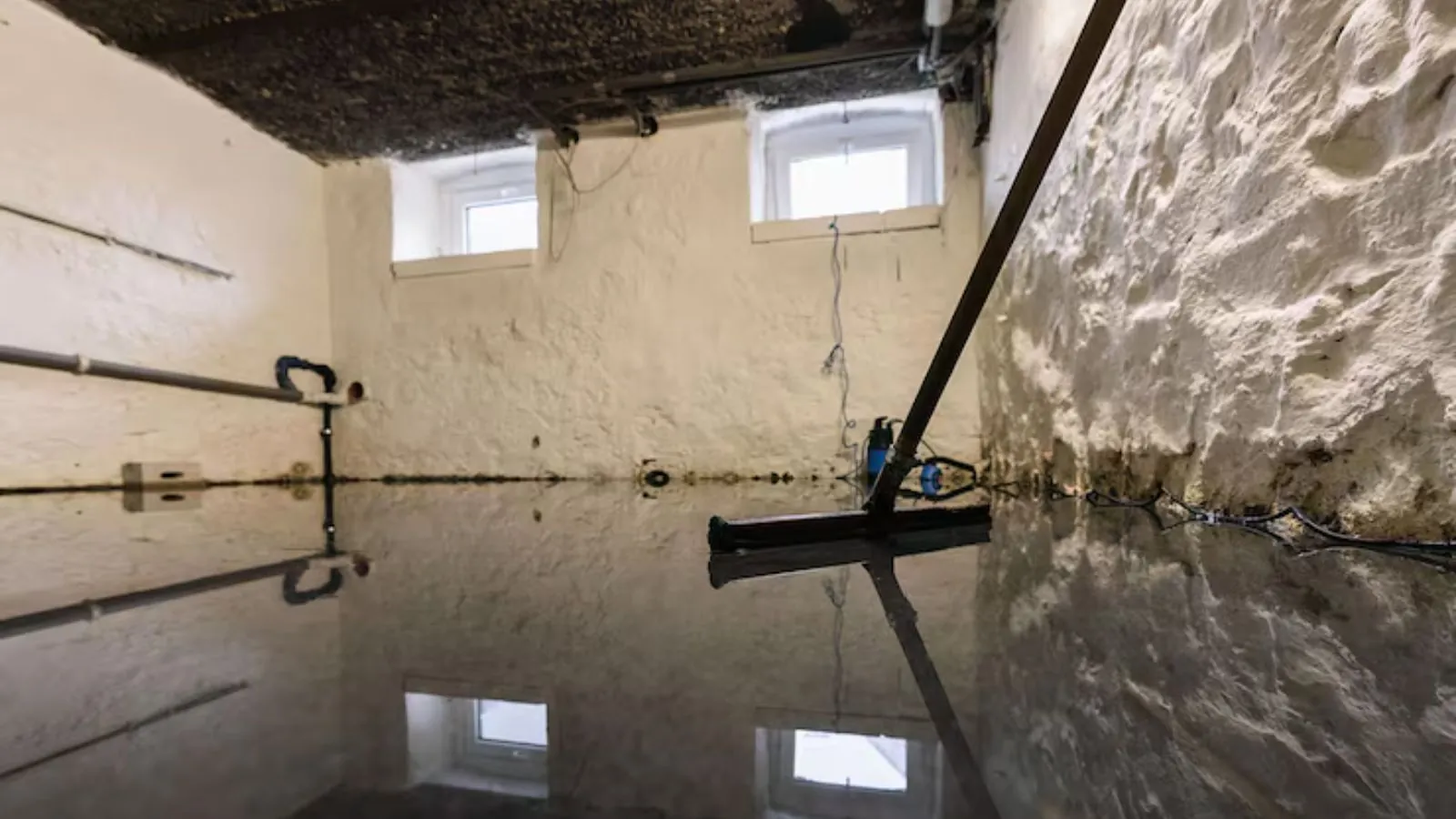
A home's water history is written on its surfaces, if you know how to read them. This guide is for buyers walking through a house before making an offer. It does not replace a professional home inspection. It helps you decide which houses deserve one and what to ask the inspector to look at closely.
Use your nose first
Notice the smell when the front door opens. A musty or damp odor, or a house heavy with air freshener, deserves a slower walk-through. Check closets and the cabinet under each sink, where odors collect.
Ceilings and walls
- Look at ceilings under bathrooms and under the attic air handler for rings, discoloration or patches of newer paint.
- Look where ceilings meet exterior walls and around chimneys.
- Sight along walls for waviness, bubbling paint or seams that show through.
- Check below windows for staining or soft drywall.
Fresh paint on one ceiling in an otherwise unpainted house is worth a question. So is a single replaced section of baseboard.
Floors
Walk slowly and feel for soft or springy spots, especially near the dishwasher, refrigerator, toilets, tubs and exterior doors. On wood floors, look for boards with raised edges, dark seams or gaps. On laminate, look for swollen joints. On carpet, look at the edges along walls for rust-colored staining from the tack strip.
Kitchens, baths and laundry
Open every sink cabinet. A stained, swollen or newly replaced cabinet floor tells a story. Look at the supply valves and the drain trap for corrosion and drip marks. Check caulk around tubs and showers, and press gently on the wall tile near the valve. Look behind the washing machine for stains on the wall and floor.
Ask the age of the water heater and look at its base and pan.
Attic, lower level and outside
| Place | What to look for | What it may mean |
|---|---|---|
| Attic | Dark stains on decking, compressed or discolored insulation | Past or current roof leak |
| Lower level or basement | White powdery deposits on walls, water lines, a dehumidifier running | Seepage through the foundation |
| Crawl space | Fallen insulation, standing water, damp soil without a barrier | Moisture under the floor |
| Exterior grading | Soil sloping toward the house, downspouts ending at the wall | Water directed at the foundation |
| Gutters and fascia | Staining, rot, overflow marks | Poor maintenance, possible wall wetting |
| Around the water heater and HVAC | Rust, stains, a pan with water | Slow leaks |
A dehumidifier running in a lower level is not automatically bad. It is a reason to ask why.
Questions for the seller
- Has the home had any water leaks, flooding or sewer backups? When, and how were they repaired?
- Are there invoices, photos or drying records?
- Were permits needed for the repairs?
- Has an insurance claim been filed for water damage?
- How old are the roof, the water heater and the supply lines to appliances?
Put the questions in writing through your agent so the answers are in writing too.
What to ask of the home inspector
Tell the inspector what you noticed. Ask for moisture meter readings at any stain and a thermal scan of ceilings under bathrooms. Ask whether a stain reads wet or dry on the day. For anything unresolved, you can ask for a specialist: a roofer, a plumber, or a restoration company to map moisture.
Old damage versus active damage
A dry stain with a known cause and a repair record is ordinary in any house more than a few years old. An active leak, or damp material with no explanation, is a different matter and should be resolved or priced in before closing.
Repaired damage with documentation should not scare you off. It often means the owner dealt with problems properly.
Insurance and flood checks before you offer
Ask your insurance agent whether the property has prior water claims on record, since that can affect your premium. Check flood maps before you fall in love with a house. A lender will require flood insurance if the building sits in a mapped special flood hazard area, and you may want it even if not.
Buying in Mooresville, NC
Sellers in this state generally fill in a residential disclosure statement, a form issued by the Real Estate Commission, and it includes questions about water problems. Read the answers closely, and remember that the form allows responses that tell you little. Your own inspection matters more.
Run the address through fris.nc.gov before you offer. The county's flood maps were under revision in 2024, so look at the map in effect and at any proposed change. This matters for lake-area properties and for homes near creeks alike.
For town addresses, permits dated 2023 or later were issued by the Town itself. Ask the Town's permit office how to look up the history for a property.
Age varies sharply by neighborhood. Mill Village houses date from 1902 to 1930, per the National Register listing, while much of the housing toward Lake Norman is recent. Old stains in an old house are expected. What matters is whether they are dry.
If you want a suspect area measured
We can map moisture in a home you are considering, with the owner's permission, and tell you what is wet today. Related reading: wall and drywall repair, ceiling water damage repair and crawl space water damage. Buyers looking in Troutman or Mount Ulla can ask for the same check.
Home buyer questions
How do I check flood risk for a Mooresville, NC home before buying?
Enter the address at fris.nc.gov, the state's Flood Risk Information System, and ask your agent and lender about flood insurance requirements.
Is a water stain a reason not to buy?
Not by itself. Find out the cause, whether it was repaired and whether it reads dry now.
Can a home inspector find hidden water damage?
Often, using a moisture meter and thermal camera. They cannot see inside every wall, so tell them what you noticed.
Should I ask for repair records?
Yes. Invoices and drying logs show the problem was handled properly.
Still have a question? Ask it on the phone, any hour.
Call (833) 521-1033