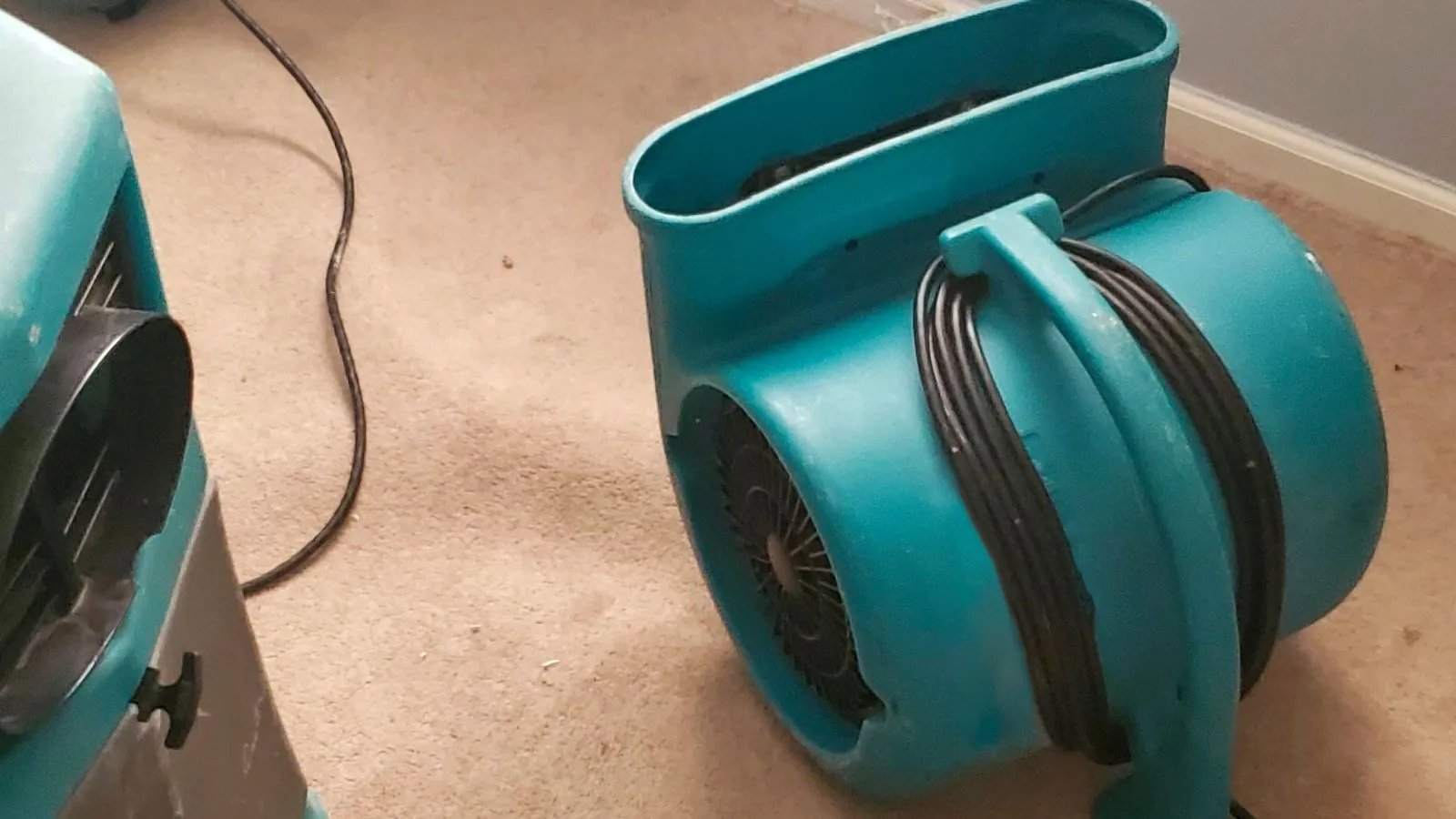
Structural drying and dehumidification in Mooresville, NC is the stage that follows water removal. It means bringing the building materials themselves, the studs, subfloor, drywall and concrete, back to their normal moisture level with controlled air movement and dehumidification.
Floor looks dry but the room still smells damp
This is how most people meet the problem. The carpet was vacuumed, the surface feels dry, yet the baseboards are swelling, the paint is bubbling low on the wall or the room has a damp smell days later.
That means water is still inside the materials. The trade name for fixing it is structural drying, and it is measured with instruments, not by touch.
Water mitigation, in plain terms
Water mitigation is the industry word for everything done to stop damage from getting worse: stopping the source, extracting water, removing what cannot be saved and drying the rest. Structural drying is the longest part of mitigation. Repairs and rebuilding come after it and are a separate phase.
Water on the floor right now? The line is answered 24/7.
Call (833) 521-1033The equipment and what each piece does
| Equipment | What it does | Where it is used |
|---|---|---|
| Air mover | Pushes dry air across wet surfaces to speed evaporation | Floors, wall bases, under cabinets |
| LGR dehumidifier | Pulls water vapor out of the air and drains it away | Closed rooms with wet materials |
| Desiccant dehumidifier | Dries air to very low humidity | Dense materials, cool spaces |
| Moisture meter | Reads moisture content inside wood and drywall | Every material, every day |
| Thermal camera | Shows cool, wet areas behind finishes | Finding hidden moisture |
| Floor mat or cavity system | Pulls or pushes air through floors and walls | Hardwood, wall cavities, ceilings |
Evaporation without dehumidification just moves water from the floor into the air and then into the drywall. The two work as a pair. The ANSI/IICRC S500 standard sets out how much equipment a space needs based on its size and how wet it is.
Moisture mapping
Before equipment is placed, a technician maps the wet area. Readings are taken on affected materials and on the same materials in a dry part of the house. The dry readings become the target.
Each day the readings are repeated and written in a drying log. Equipment is moved or removed as areas reach the target. That log is the proof the structure is dry, and it is useful for an insurance file.
How long drying takes
Most clean-water losses dry in three to five days. Hardwood, plaster, concrete and double layers of drywall take longer. Temperature, humidity and how long the materials were wet all change the answer.
Mooresville summers are humid, so opening windows often works against the equipment. The room is usually kept closed so the dehumidifier dries the building, not the outdoors.
Living with the equipment
Air movers are loud and dehumidifiers put out warm air. They need to run around the clock. Turning them off at night adds days. Keep doors to the drying area closed and leave the placement alone, since it is set for airflow.
We use this equipment on our own jobs. We do not rent air movers or dehumidifiers out separately.
When drying is not enough
Materials that sat in contaminated water are removed, as explained under sewage backup cleanup. Drywall that has lost its strength is replaced, which the wall and drywall repair page covers. Wood floors need their own method, described under hardwood floor water damage. Standing water has to be pulled first through water extraction.
What to do, and what not to do, while equipment runs
- Do keep windows and doors to the drying area closed.
- Do keep children and pets away from air movers and cords.
- Do not switch units off overnight or move them.
- Do not plug other heavy appliances into the same circuit. Tell the crew if a breaker trips.
What changes the price of structural drying
Size of the wet area
More square feet means more equipment.
Class of water loss
Wet carpet alone dries faster than soaked walls, ceilings and subfloor together.
Materials
Dense or layered materials extend the days needed.
Days on site
Equipment is typically billed by the day, so faster drying costs less.
Demolition needed
Removing baseboards, insulation or flooring adds labor.
Drying after a sudden, covered water loss is normally part of the same insurance claim. Ask your insurer how your policy handles it. We put the scope and price in front of you before starting.
Where we work
Equipment is set and monitored daily at Mooresville addresses in 28115 and 28117. Daily visits extend to Troutman and to Mount Ulla too.
Structural drying: common questions
How do I know when it is actually dry?
When moisture meter readings on the wet materials match readings from dry areas of the same house. Touch and smell are not reliable.
Can I use my own fans and a store dehumidifier?
For a small spill on a hard floor, yes. Household units do not move enough air or remove enough water to dry wall cavities and subfloors before problems start.
Do you rent out drying equipment?
No. The equipment is used on jobs we monitor, because placement and daily readings are what make it work.
Will drying prevent mold?
Prompt drying removes the moisture mold needs. Nobody can promise mold will not develop, particularly if materials were wet for days before drying began.
Is the equipment safe to leave running?
Yes. It is built to run continuously. Keep cords clear of walkways and keep children and pets away from the units.
Still have a question? Ask it on the phone, any hour.
Call (833) 521-1033