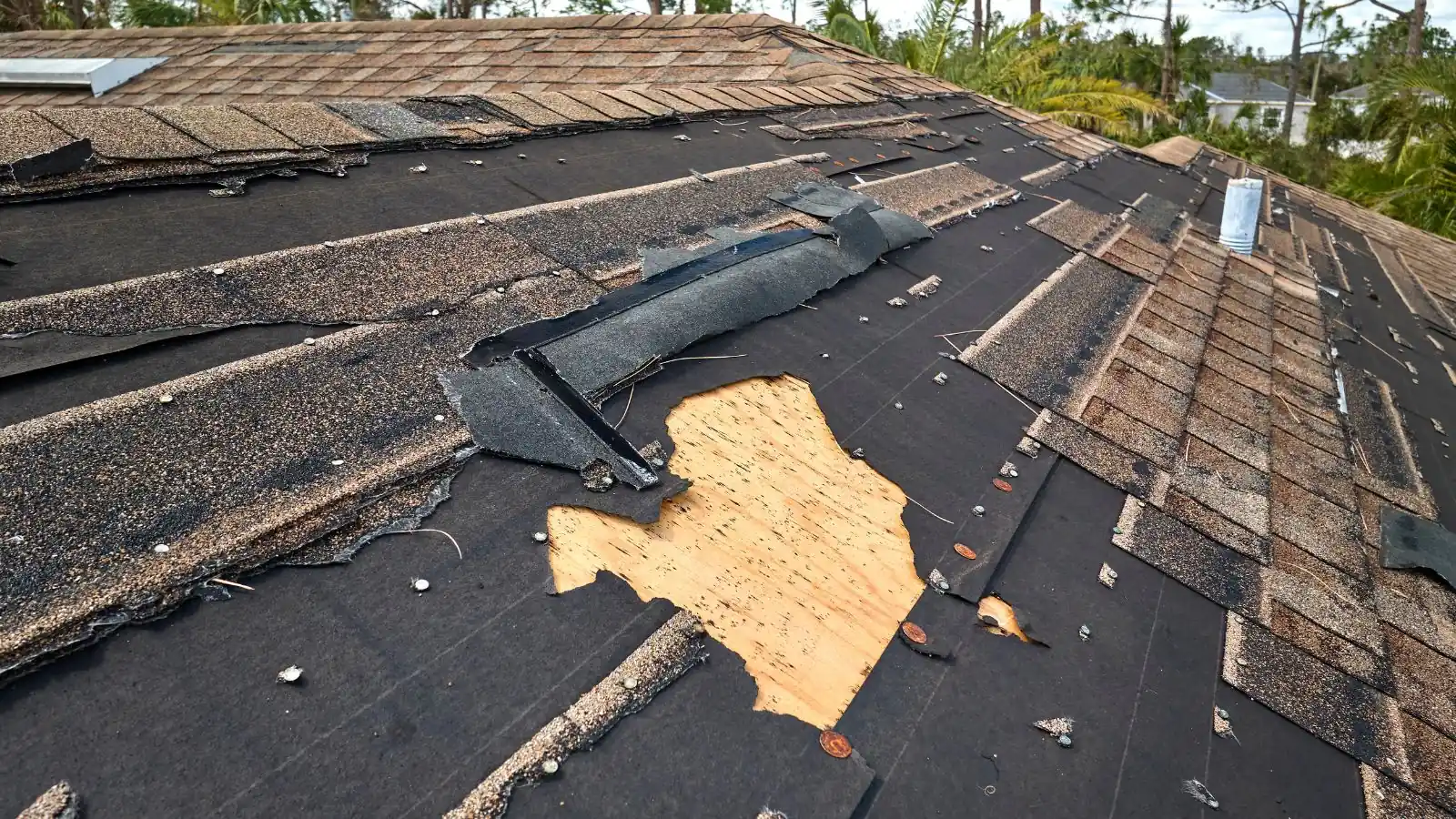
After a storm, the water inside your house is still doing damage long after the rain stops, and emergency storm water damage cleanup in Mooresville, NC can be arranged 24/7. Stay away from downed lines and report them to the power company. If it is safe, put buckets under drips, move furniture away from wet walls, and cover a damaged window or roof opening from the inside.
Storm water damage is rain that entered through the building envelope: a roof opened by wind or a fallen limb, a broken window, failed flashing, or rain driven sideways through siding and around doors. It is different from flooding, where water rises from the ground.
When storm damage is an emergency
Call right away if the roof is open to the sky, a ceiling is sagging, or water is running down the inside of walls. Those situations get worse with every band of rain. A slow drip at one spot is less urgent and may simply be a roof leak, which our ceiling water damage repair page covers.
A tree on the house, sparking lines or the smell of gas come first. Call 911 or the utility and leave the building. Water cleanup waits until the structure is safe to enter.
Storms in this part of the Piedmont
Mooresville sees summer thunderstorms with strong wind gusts, and it sits far enough inland that tropical systems usually arrive as heavy rain. In 2020, rain tied to Tropical Storm Eta closed at least 230 roads across North Carolina, according to the State Climate Office. That is a statewide figure and says nothing about a particular Mooresville street.
The National Weather Service office in Greenville-Spartanburg issues the watches and warnings for Iredell County. We do not quote rainfall totals for the town, because we have no primary-source figure to give you.
Water on the floor right now? The line is answered 24/7.
Call (833) 521-1033Where storm water gets in
| Entry point | What you see inside | What gets wet |
|---|---|---|
| Missing shingles or a punctured roof | Ceiling stains, dripping, wet attic | Decking, insulation, ceiling drywall |
| Flashing at a chimney or wall | Stain on a ceiling edge or wall top | Framing and drywall near the joint |
| Window or door | Wet sill, water on the floor below | Trim, drywall, flooring |
| Siding in wind-driven rain | Damp wall with no obvious hole | Sheathing, insulation, interior drywall |
Siding leaks are the sneaky ones. One caller found a kitchen wall wet from a siding failure with no drip at all. Walls like that are opened and dried as described under wall and drywall repair.
What the cleanup involves
First the opening is covered. A roofer or tree crew makes the structure safe, and a tarp keeps the next shower out. Then water is extracted from floors and carpets, and wet attic insulation is removed.
Moisture meters and a thermal camera show which ceilings and walls took water. Sagging drywall is taken down. Framing, decking and subfloors are dried with air movers and dehumidifiers until daily readings are normal.
Rain that fell through a roof is treated as clean to gray water, depending on what it passed through. If water rose from outside and came in at ground level, that is flood damage cleanup, with stricter rules about what can be kept.
What not to do after storm damage
- Do not go onto a wet or damaged roof.
- Do not touch a ceiling fixture that has water in it.
- Do not use a generator indoors or in a garage.
- Do not throw out damaged items before photographing them for your insurer.
What changes the price of storm cleanup
Size of the opening
A few lifted shingles and a limb through the roof are different events.
Rooms affected
Water running down through two stories multiplies the work.
Insulation
Wet attic insulation has to be removed and replaced.
Time exposed
Days of rain through an untarped roof soak deeper.
Exterior repairs
Roofing, windows and siding are separate trades with separate costs.
Wind damage and the rain that follows through the opening are often covered by homeowners insurance, while rising floodwater is not. Policies in North Carolina may also carry a separate wind or named-storm deductible. Check yours or ask your insurer, and photograph the damage before temporary repairs.
Areas we cover
After a storm, crews work wherever the damage is in Mooresville's two ZIP codes, 28115 and 28117. They also reach Troutman and Mount Ulla, where homes on open land take more wind.
Storm water damage: common questions
Do you handle storm water damage emergencies at night or on weekends in Mooresville?
Yes. Storms rarely keep business hours, so the phone is answered around the clock. Once it is safe, call and describe where water is coming in.
Do you tarp roofs?
Temporary covering can be arranged as part of limiting the damage. Permanent roof repair needs a roofer.
Is storm water damage the same as flood damage?
No. Storm damage here means water that came in from above or through walls. Flood damage is water rising from the ground, and insurance treats the two differently.
Should I wait for the adjuster before cleanup?
Do not wait to prevent further damage. Take photos, make temporary repairs, keep receipts and tell your insurer. Drying can begin while the claim is open.
Can a wet attic dry without help?
Wet insulation holds water against the ceiling and decking. It normally needs to come out so the wood can dry.
Still have a question? Ask it on the phone, any hour.
Call (833) 521-1033