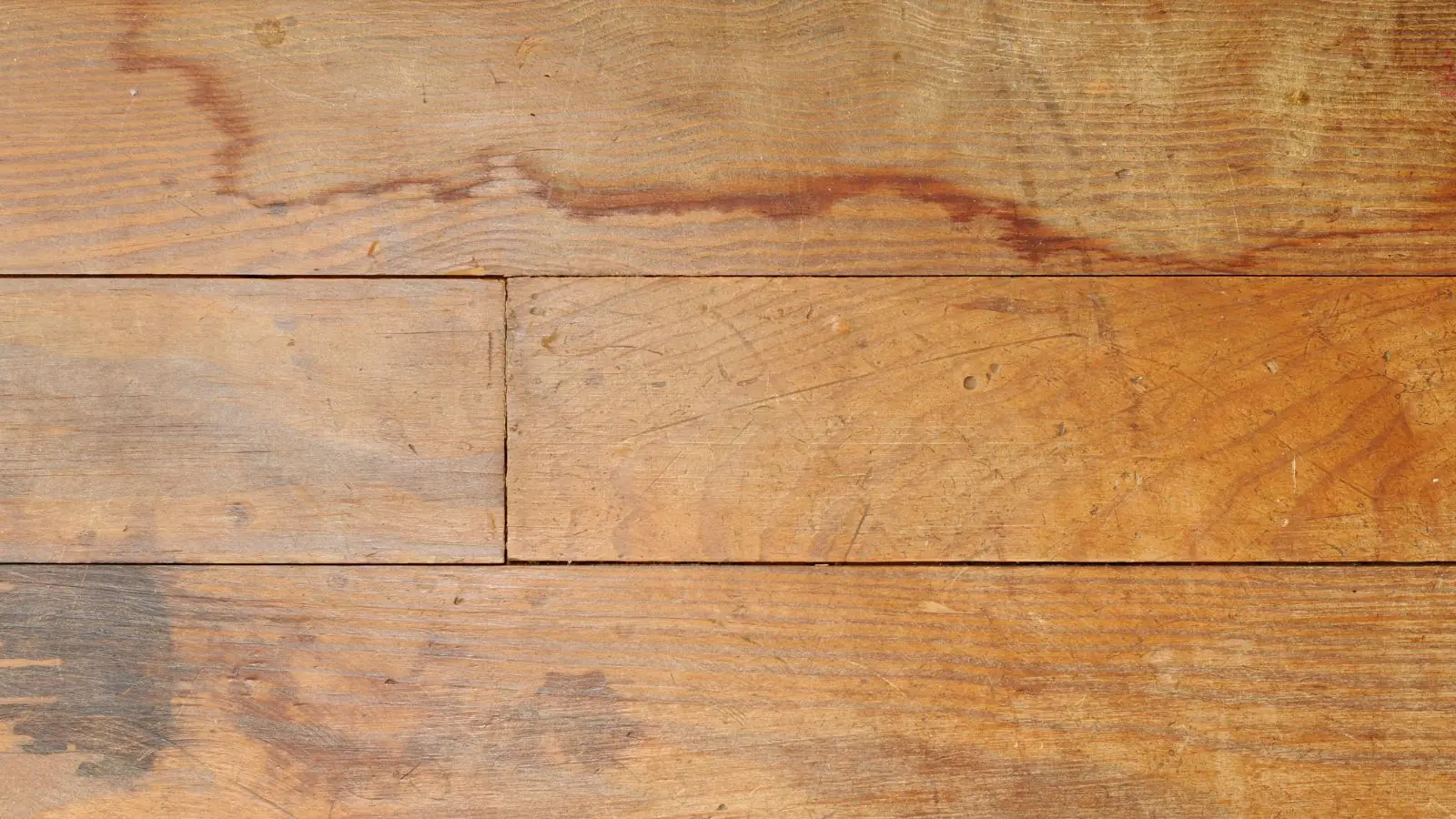
Hardwood floor water damage repair in Mooresville, NC starts with a question most owners do not expect: can the floor be saved without replacing it? Often it can. Wood swells when it absorbs water and shrinks when it releases it, and a floor dried in a controlled way frequently settles back close to flat.
This page covers wood and wood-look flooring as a material: solid hardwood, engineered wood and laminate. The source of the water has its own page elsewhere.
What wet wood flooring looks like
- Cupping: board edges sit higher than the centers, giving a washboard feel
- Crowning: centers sit higher than the edges, often after sanding a cupped floor too soon
- Buckling: boards lift off the subfloor entirely
- Dark seams or gray staining: water has reached the wood under the finish
- Gaps appearing later: boards that swelled, crushed their edges and then shrank
Cupping is the one callers mention most. One had walnut boards cup after an HVAC condensate line backed up. Another had a washer valve break and wet the floor in the next room. Both are typical: the water arrived from the side or from below.
Solid, engineered or laminate
| Floor type | How it reacts to water | Usual outcome |
|---|---|---|
| Solid hardwood, nailed down | Cups as it swells, can flatten when dried | Often saved, sometimes refinished |
| Engineered wood | Thin wear layer over plywood, may delaminate | Saved if caught early, replaced if layers separate |
| Glue-down wood on a slab | Water trapped beneath, adhesive fails | Frequently replaced |
| Laminate | Fiberboard core swells at the joints | Almost always replaced once swollen |
Laminate is the honest exception. Its core is compressed fiber, and swelling at the edges does not reverse. If your laminate has puffed seams, drying saves the subfloor, not the planks.
Water on the floor right now? The line is answered 24/7.
Call (833) 521-1033How wood floors are dried
Readings come first. A meter with pins or a flat sensor measures the boards and the subfloor beneath them, and dry boards in another room give the target number.
Drying mats are then sealed to the floor surface and connected to a vacuum unit that draws moisture up through the seams. At the same time a dehumidifier lowers humidity in the room. Where there is a crawl space or basement under the floor, air movers dry the subfloor from below as well.
Speed matters in both directions. Too slow and the boards stain and stay cupped. Too fast and they crack. Readings are taken daily and the equipment adjusted, following the ANSI/IICRC S500 approach.
Do not sand a cupped floor yet
This is the most expensive mistake in wood floor repair. A cupped board is still wet. If it is sanded flat while swollen, it shrinks as it dries and the center ends up high, which is crowning. Wait until readings confirm the floor is back to its normal moisture content, then judge whether a refinish is needed at all.
Finding the water under the floor
Wood floors usually get wet from a source in another material. A dishwasher or refrigerator line is covered under appliance leak water damage. A unit overflowing in a hall closet is an AC leak. Moisture rising from below may be a crawl space water damage problem, and drying the boards without fixing that will not last.
Mooresville has older homes near downtown with original wood floors and newer houses with engineered flooring. We do not guess from the age of the house. The meter and a look at a floor vent or threshold show what the floor is made of.
What to do while the floor is wet
- Wipe up surface water and remove wet rugs straight away.
- Do not cover the floor with plastic or drop cloths, which trap moisture.
- Do not point a heater at the boards. Fast surface drying can crack them.
- Keep foot traffic light until readings are taken.
What changes the price of hardwood floor repair
Square footage affected
Mats and equipment scale with the wet area.
Floor construction
Nail-down solid wood dries more readily than glued or floating floors.
How long it was wet
Boards wet for a day behave differently from boards wet for a week.
Access from below
A crawl space or basement lets the subfloor be dried from underneath.
Refinishing or replacement
Sanding, staining and board replacement are scoped after drying.
Sudden leaks that damage flooring are often covered by homeowners insurance, and matching the rest of a continuous floor is a common question to raise. Ask your insurer how your policy treats it. We explain what we plan to do and what it costs, then we start.
Service area
Wood floor drying is available to Mooresville homeowners in 28115 and in 28117. We bring the same drying mats to Troutman and to Mount Ulla. If water is still running, call the 24/7 line first.
Hardwood floor water damage: common questions
Will cupped hardwood go flat again?
Often, yes, if it is dried within days and the boards were not wet for long. Severe or long-standing cupping may leave some shape that sanding corrects later.
How long does it take to dry a hardwood floor?
Commonly one to two weeks with drying mats, longer than drywall or carpet. Wood has to release moisture slowly.
Can you save laminate flooring?
Rarely. Once the joints swell, the planks are replaced. Drying still matters for the subfloor underneath.
Should I pull up the wet boards myself?
Not before a moisture check. Removing boards can be the right call, but many floors that look ruined on day two are fine after drying.
Will the floor need refinishing afterward?
Sometimes. If the finish is intact and the boards flatten, no. If the surface stained or stayed uneven, a sand and refinish follows drying.
Still have a question? Ask it on the phone, any hour.
Call (833) 521-1033