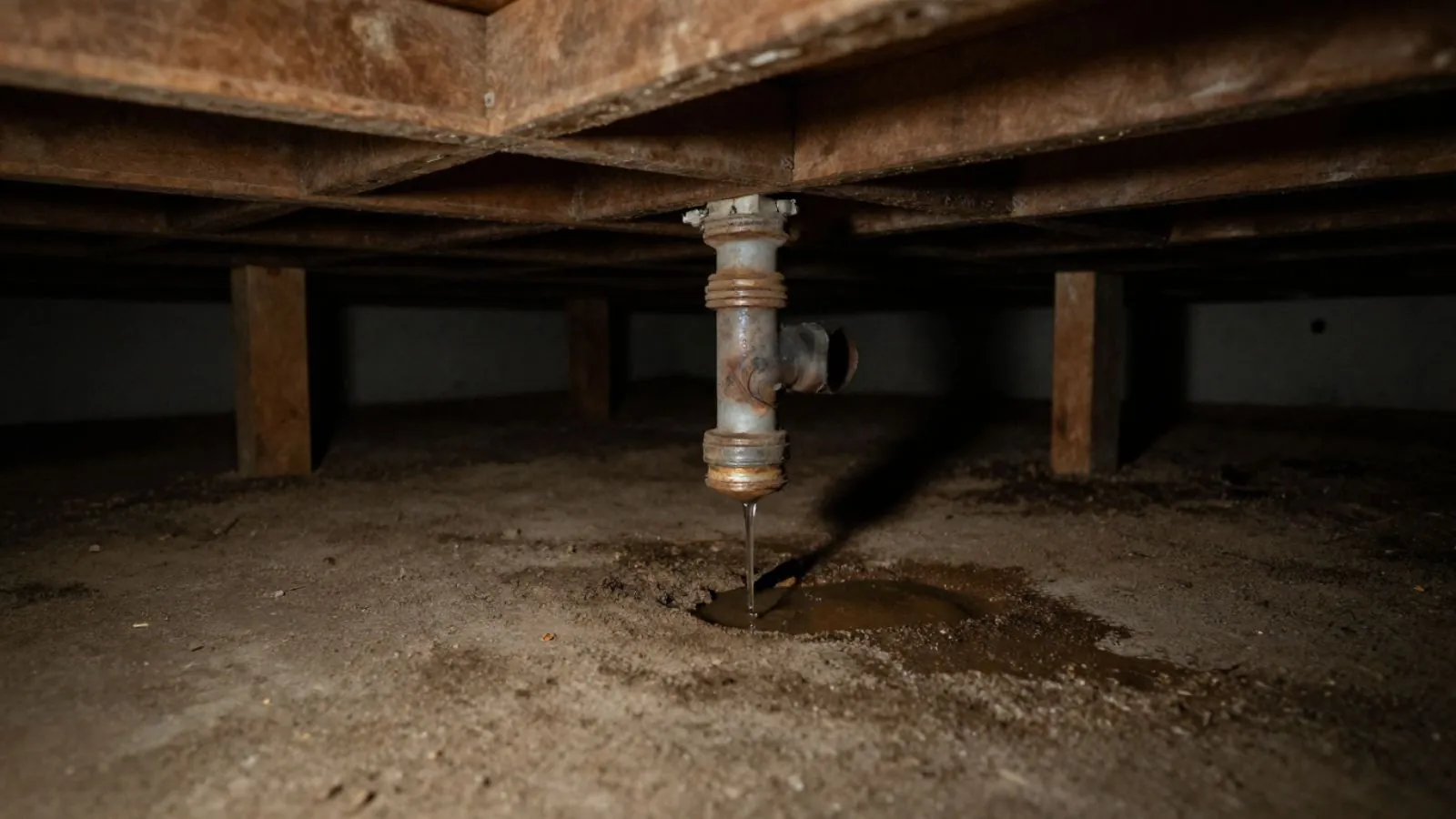
Crawl space water damage cleanup in Mooresville, NC addresses the under-floor void: the soil, the piers, the joists, the insulation between them and the subfloor above. Water gets there from a plumbing line, from rain running under the foundation wall, or from humid air condensing on cool surfaces.
A crawl space is forgiving for a few days and unforgiving after that. Wood that stays wet softens and grows mold, and damp air from below rises into the living space.
How water ends up in a crawl space
- A supply or drain line leaking under the floor
- Rainwater entering through foundation vents or low spots after a storm
- Downspouts and grading that send water toward the house
- An irrigation line or backflow device leaking against the foundation
- Humid summer air condensing on ducts and joists
Callers have described several of these, including an irrigation backflow failure that sent water under the house. The source decides the fix. The cleanup below applies to all of them.
Signs you can spot without going in
Fiberglass insulation sagging or lying on the ground, a musty smell near floor registers, floors that feel soft or bouncy, condensation on ductwork and a visible water line on the piers all point to trouble. Look from the access door with a flashlight. Do not enter if water is standing near wiring or the furnace.
Water on the floor right now? The line is answered 24/7.
Call (833) 521-1033How a wet crawl space is cleaned up
| Condition found | What is done |
|---|---|
| Standing water | Pumped out, source identified |
| Soaked or fallen insulation | Bagged and removed |
| Wet joists and subfloor | Air movement and dehumidification until readings are dry |
| Torn or missing vapor barrier | Removed where contaminated, replacement recommended |
| Contamination from a drain line | Affected soil and surfaces treated, handled as Category 3 |
A crew pumps out standing water with a submersible pump and removes insulation that has absorbed it. Wet fiberglass does not recover, and it holds moisture against the wood. Then air movers and a dehumidifier are set in the space, sometimes with the vents sealed for the duration so the equipment is not trying to dry the outdoors.
Joists and subfloor are checked with a moisture meter at several points and logged daily. The goal is wood that reads in the normal range for the house, measured, not guessed. That is the approach ANSI/IICRC S500 sets out for structural materials. That process is described further on the structural drying page.
What we do and do not do
We remove water, remove ruined insulation, dry the structure and tell you what we found. We do not install drainage systems, regrade yards or encapsulate crawl spaces as a product. If the cause is groundwater or drainage, a specialist in that work is the right follow-up, and we will say so.
If the water came from a line in the floor above, see burst pipe water damage. If your home has a below-grade room, the basement water damage page is the better fit. Rising creek or surface water is covered under flood damage cleanup.
Crawl spaces in the Mooresville area
We have no primary-source count of how many local homes sit on crawl spaces, so we will not call it the typical foundation. What we can say is that the Piedmont has humid summers, and a vented crawl space exchanges air with the outdoors. Whether yours has a problem is a question for a flashlight and a moisture meter, not a general rule.
What changes the price of crawl space cleanup
Clearance
A low crawl space slows every task, from pumping to insulation removal.
Amount of insulation
Removing and bagging wet insulation is labor heavy.
Water source
Clean supply water differs from drain water or outdoor runoff.
Drying days
Framing that has been wet a long time takes longer to dry.
Follow-up work
New insulation and vapor barrier are scoped separately.
Insurance usually turns on the cause. A sudden pipe break under the floor is often covered. Groundwater and long-term dampness often are not. Ask your insurer. Scope first, price second, work third. That is the order.
Service area
Under-floor cleanup is offered at any Mooresville address, 28115 or 28117. It is also a frequent request from Troutman and from rural Mount Ulla. The phone is answered 24/7 if the water is rising.
Crawl space water damage: common questions
Is water in a crawl space an emergency?
A little dampness is not. Standing water near wiring or equipment, or a pipe actively leaking, needs prompt attention. Call any time and we will help you judge.
Can wet insulation be dried?
Not practically. It is removed so the wood can dry, then replaced once readings are normal.
Do you install vapor barriers or encapsulation?
No. We dry the space and remove damaged material. We can tell you what a follow-up contractor should look at.
Why does my house smell musty?
Air from the crawl space rises into the rooms above. Damp wood or soil below often explains a smell at floor level.
How long does drying take?
Often four to seven days for wet framing, depending on how long it was wet and how well the space can be closed off.
Still have a question? Ask it on the phone, any hour.
Call (833) 521-1033