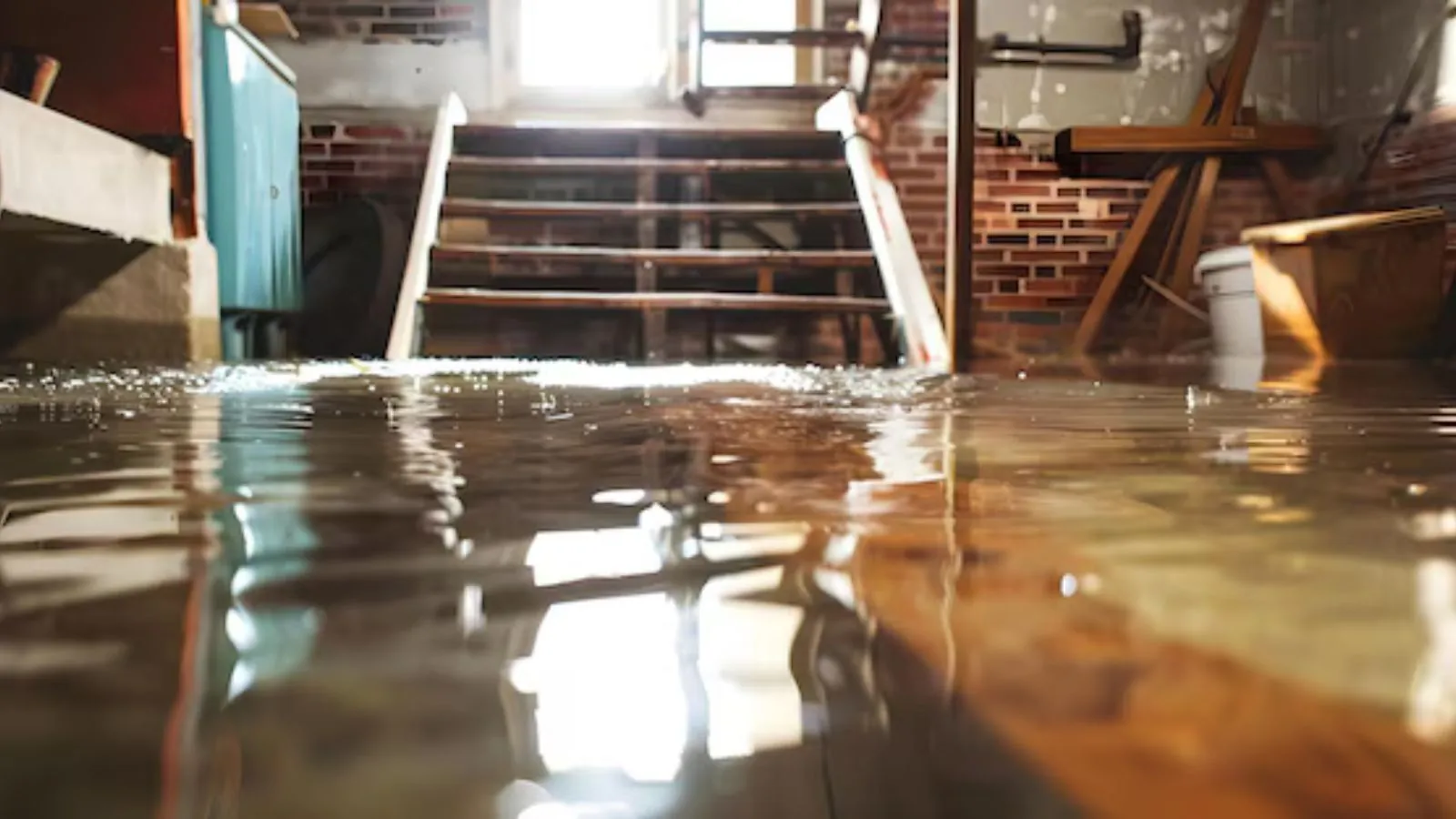
The water is gone, the floor feels dry, and a week later the room smells like a wet towel. That smell is useful information. It is telling you that something in the room has not dried. This guide explains how to track it down and what actually removes it.
Where the smell comes from
Musty odor is produced by microbes growing on damp organic material: wood, paper, dust, carpet backing. They need moisture to grow. Take the moisture away and the growth stops, and the smell fades.
That is the whole logic of odor removal after water damage. Dry the source and the smell goes. Cover the smell and it comes back.
What does not work
- Air fresheners and scented sprays: they add a second smell on top of the first.
- Opening windows in humid weather: you may be letting damp air in.
- Painting over it: a stain-blocking primer seals a stain, not a wet wall.
- Carpet powder: it does nothing for a wet pad.
- Running a fan alone: it moves moisture into the air, where it settles somewhere else.
- Ozone or fogging as a first step: these treat the air, not the wet material.
Finding the damp spot
Start where the water was, then widen the search. Water travels under walls and along framing, so the damp material may be in the next room.
| Place to check | What to look and feel for |
|---|---|
| Carpet edges and closets | Damp pad, rusty tack strip, discolored backing |
| Baseboards | Swelling, gaps, soft drywall just above |
| Under sinks and behind toilets | Stained cabinet floors, soft flooring |
| Wall behind the washer or refrigerator | Stains, peeling paint |
| Ceiling below a bathroom | Faint rings, sagging |
| HVAC closet and return grille | Wet filter, water in the pan |
| Crawl space or lower level | Hanging insulation, damp soil, condensation |
| Stored items | Cardboard boxes and fabrics that got wet |
Your nose will narrow it to a room. A moisture meter narrows it to a square foot. Inexpensive pin meters are sold at hardware stores and are good enough to compare a suspect area with a known dry one.
Fixing it properly
- Find and stop the moisture source. A smell that returns means water is still getting in.
- Remove what cannot be dried: wet carpet pad, soaked insulation, swollen particleboard, wet cardboard.
- Dry what remains with airflow and dehumidification until readings match dry areas.
- Clean hard surfaces and wash or clean fabrics.
- Replace the HVAC filter, and have the system checked if water reached it.
Only after those steps is deodorizing worth doing, and often it is no longer needed.
Soft goods and contents
Fabrics hold odor. Wash what can be washed, with the items fully dried afterward. Upholstered furniture that was soaked through is hard to recover. Books and paper that stayed damp usually keep the smell.
Do not move damp items into a closet or garage "for now." You will simply relocate the problem.
When it is more than a smell
If you see visible growth, if the smell is strong in a room with no obvious damp spot, or if materials have been wet for more than a few days, the job is past the do-it-yourself stage. We do not diagnose mold or give health advice. Mold needs moisture, testing and remediation follow the ANSI/IICRC S520 standard, and health questions belong with a physician.
A sewage smell is a different matter altogether. That points to a drain or sewer problem and needs a plumber.
How long should a smell last?
After proper drying, a faint odor can linger for a few days as the last moisture leaves and the room airs out. A smell that is as strong after two weeks as it was on day three means something is still wet.
Why this is common in Mooresville, NC
North Carolina's public health agency states on its mold page that indoor mold growth can be controlled by controlling moisture. It also notes that porous materials such as carpeting and wallboard usually should be discarded when mold has grown on them, because they cannot be completely cleaned and thoroughly dried.
The Piedmont's humid summers make the first point harder. In July, outdoor air in Mooresville often carries more moisture than the air inside an air-conditioned house, so airing out a damp room can slow drying. Keep the room closed and run a dehumidifier.
Vented crawl spaces and attic air handlers are two places local homeowners rarely look. If a smell is strongest near floor registers, or near a hallway ceiling in summer, check those before anything else.
If you need help tracking it down
A moisture assessment finds what is still damp behind finishes. From there the fix is the drying process on our structural drying page, sometimes with carpet water damage work or crawl space water damage cleanup. Odor calls come in from town, from Troutman and from Mount Ulla.
Odor questions
Why does my Mooresville home smell musty in summer after a leak?
Humid outdoor air slows drying, and materials that seemed dry can still hold moisture. Keep the area closed, dehumidify it and have the moisture checked.
Will the smell go away without doing anything?
Only if the material dries fully. If it stays damp, the smell stays.
Does a musty smell always mean mold?
It means microbial growth on something damp. Whether that is a mold problem needing remediation is a question for an assessment.
Can I use bleach?
Bleach can clean hard, non-porous surfaces. It does not dry a wall or fix odor in porous materials.
Still have a question? Ask it on the phone, any hour.
Call (833) 521-1033