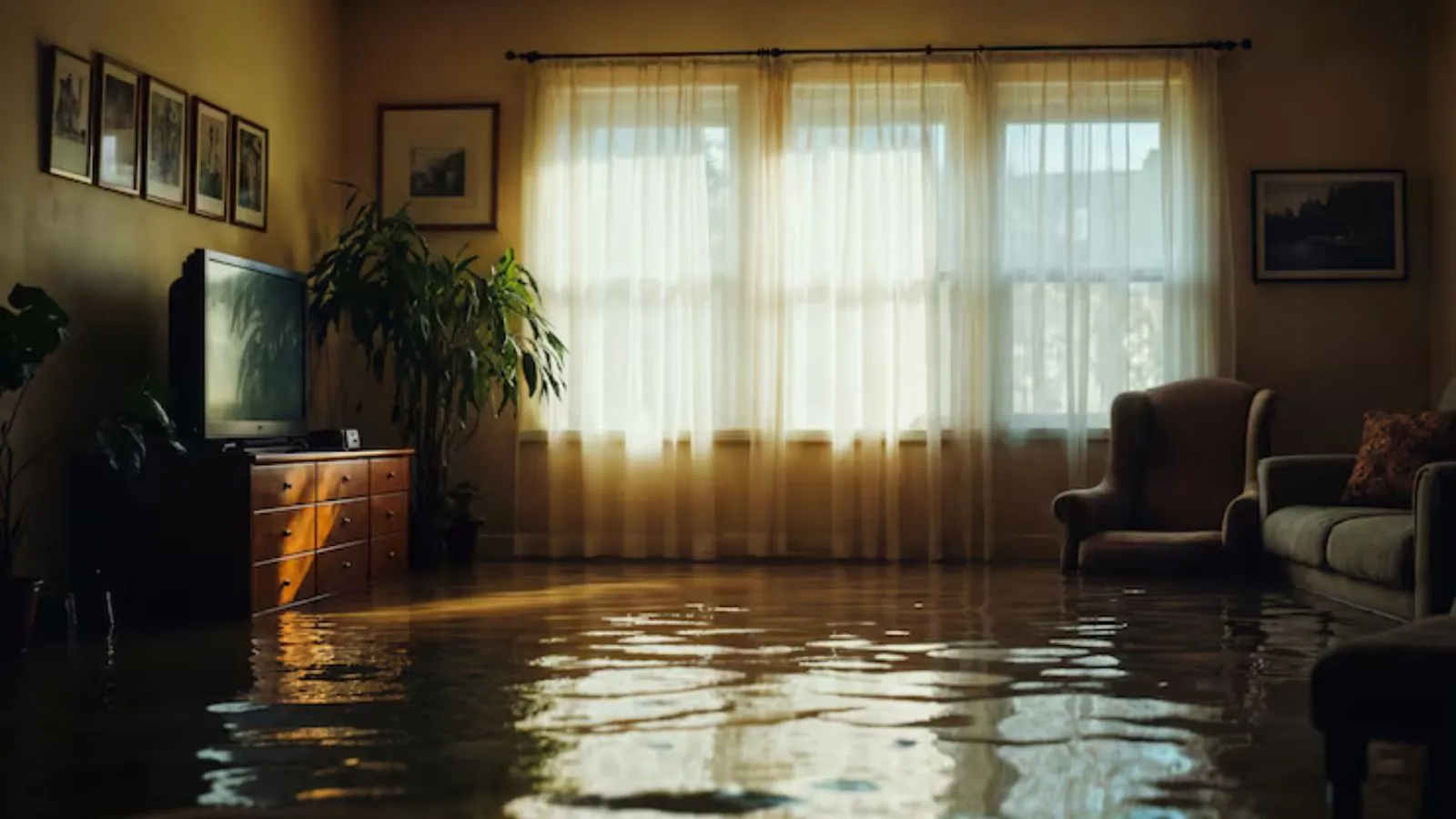
A wet floor is a nuisance. A wet floor with live electricity on it is a hazard. This guide covers what to do about electronics, appliances and wiring when a home takes on water, in the order that keeps you safe.
First rule: do not reach across water
If water has reached outlets, power strips, appliances or the electrical panel, do not walk into it. Do not unplug anything while you are standing on a wet floor. Call your power utility, an electrician or 911 for immediate danger.
Never operate a breaker while standing in water or with wet hands. If the panel is in a dry spot and you can reach it on dry footing, switching off the circuits that feed the wet rooms is the safest move.
When it is safe to unplug
| Situation | What to do |
|---|---|
| Device is dry, floor is dry, water is in another room | Unplug and move it out |
| Device is on a wet floor, power is confirmed off at the panel | Unplug and move it to a dry room |
| Device is wet and plugged in, power still on | Leave it. Turn off the circuit from a dry location first |
| Water is at or above outlet height | Stay out until the power is shut off by the utility or an electrician |
| Panel itself is wet | Do not touch. Call the utility |
What water does inside electronics
Water on a circuit board bridges contacts that should never touch. If the device is powered, that short circuit can burn components instantly. Even with the power off, minerals and contaminants in the water start corrosion that continues after the surface looks dry.
That is why the common instinct to switch a wet device on "to see if it still works" is the worst thing to do. If it was off when it got wet, leave it off.
What can be recovered
Clean water, a short exposure and no power at the time give the highest odds. A laptop splashed by a supply line and dried by a specialist has a fair chance. A television that sat in floodwater does not.
- Phones, laptops, tablets: power down, do not charge, take to a repair shop. Rice does little.
- Televisions and audio gear: unplug when safe, keep upright, have them assessed before powering on.
- Desktop computers: the drives often survive even when the machine does not. Data recovery is a separate service.
- Large appliances: motors and control boards that were submerged need a technician's inspection before use.
- Anything wet by sewage or floodwater: generally not worth saving, and porous parts cannot be cleaned.
Take photos and note model numbers before disposal, and keep purchase receipts if you still have them. Electronics are part of the contents portion of an insurance claim.
Wiring, outlets and the HVAC system
Devices are replaceable. The house wiring matters more. Outlets, switches, breakers and wiring that were submerged should be inspected by a licensed electrician before power is restored to them. Many components are not designed to be dried and reused.
A furnace, air handler or water heater that sat in water needs a technician's check as well. Do not run the HVAC system if water reached the unit or the ductwork, because it can spread moisture and contamination through the house.
Moving electronics during drying
Drying equipment makes a room warm and very dry, with strong airflow. That is hard on electronics left in place. Move them to an unaffected room and keep them off the floor. Tell the crew about anything that cannot be moved, such as a wall-mounted television above a wet wall.
Notes for Mooresville, NC homes
Electrical repairs after a water loss fall under the North Carolina State Building Codes, and in Mooresville the Town's own building permit office, opened in 2023, enforces them. If an electrician replaces wiring, a panel or circuits after water damage, ask that office whether a permit and inspection apply.
Mooresville's summers are humid, which slows the drying of anything left in a closed, unconditioned space such as a garage. Electronics set aside for assessment should be kept indoors in a dry room, not on a garage shelf.
We do not name a power company here, because providers differ by address. Your bill or meter shows who to call to have power disconnected in an emergency.
How this connects to the cleanup
Getting the water out comes first, which our water extraction page explains. In businesses, where servers and point-of-sale equipment sit near the floor, the planning is covered under commercial water damage. Homes and shops in Troutman and Mount Ulla get the same safety-first approach.
Wet electronics: short answers
Who do I call in Mooresville if water has reached my electrical panel?
Call the power utility named on your electric bill, or 911 if anyone is in danger. Stay out of the area. An electrician should inspect the panel before it is used again.
Does putting a phone in rice work?
Not reliably. Power it off, do not charge it, and take it to a repair shop quickly.
Can outlets that got wet be reused?
Have an electrician decide. Outlets and breakers that were submerged are commonly replaced.
Are wet electronics covered by insurance?
Personal property is often covered when the water loss itself is covered. Ask your insurer and keep a list with photos and model numbers.
Still have a question? Ask it on the phone, any hour.
Call (833) 521-1033