If you have spoken to an insurer or a contractor after a leak, you have probably heard mitigation, remediation and restoration used as if they were one thing. They are not. Each names a different stage, and knowing which is which helps you read an estimate and ask better questions.
The short version
| Term | What it means | When it happens | Typical work |
|---|---|---|---|
| Mitigation | Stopping the damage from getting worse | First hours and days | Shut-off, extraction, drying, removing ruined materials |
| Remediation | Removing or treating a contaminant | When contamination is present | Sewage cleanup, mold removal under containment |
| Restoration | Returning the home to its pre-loss condition | After the structure is dry and clean | Drywall, flooring, cabinets, paint |
Many companies use "water damage restoration" as the name for the whole process. That is fine as a label. On paperwork, though, the stages are usually billed and approved separately.
Mitigation: the emergency stage
Mitigation is about time. Water keeps moving into materials until someone stops it, so this stage starts immediately and does not wait for an insurance decision. Your policy generally requires you to mitigate.
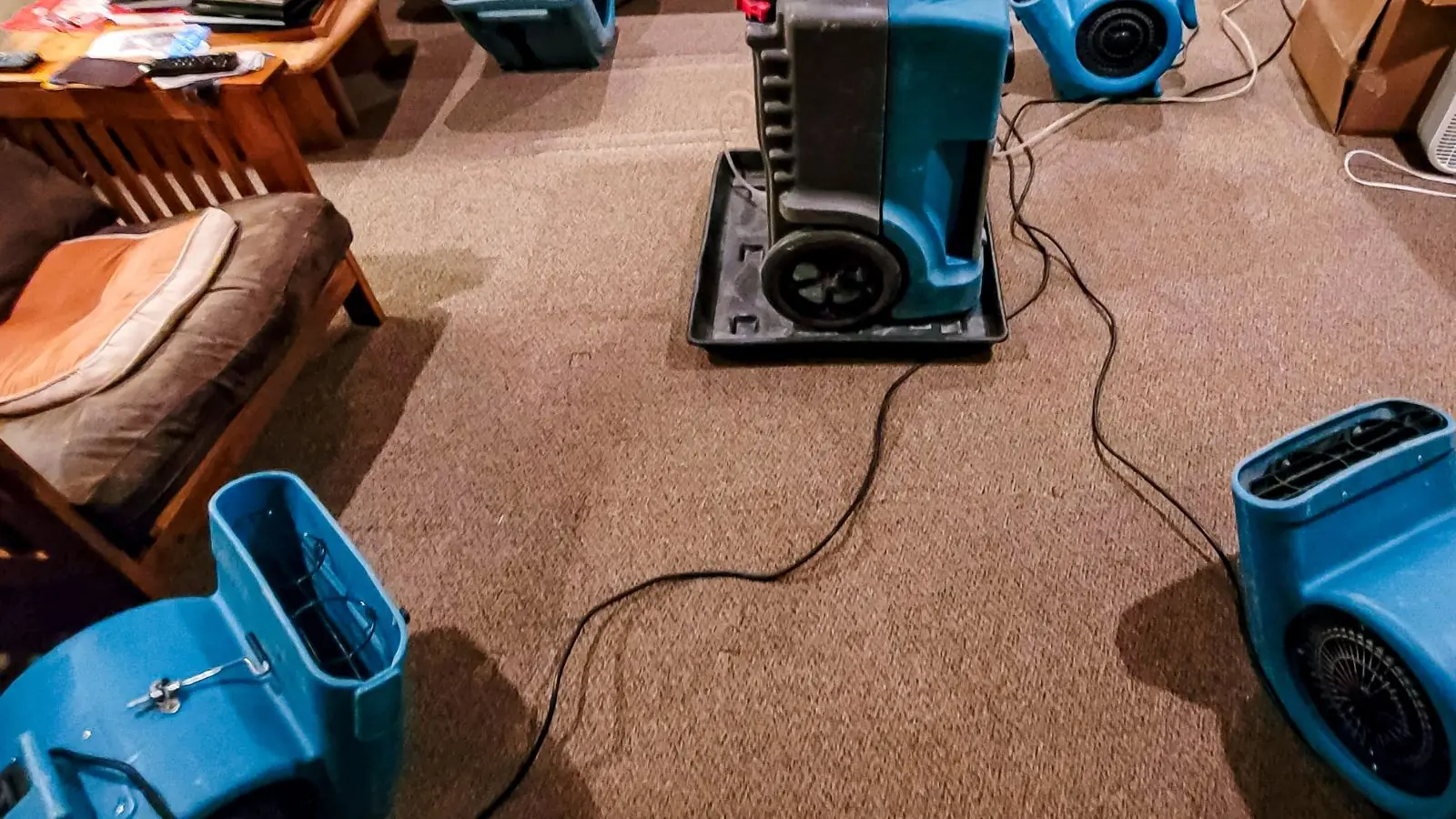
The tools are pumps, extraction units, air movers, dehumidifiers and moisture meters. The output is a dry structure and a log that proves it. Nothing is rebuilt during mitigation. In fact, the house often looks worse at the end of it, with baseboards off and sections of wall removed.
Remediation: the contamination stage
Remediation means dealing with something that should not be there. In water damage the two usual cases are sewage and mold. Both involve containment, protective equipment, removal of affected porous materials and cleaning of what remains.
Not every water loss needs remediation. A clean supply line caught within hours is mitigation followed by repairs. Remediation enters when the water was contaminated to begin with, or when materials stayed wet long enough for mold to grow.
Mold remediation follows a different published standard, ANSI/IICRC S520, while water damage work follows S500. They are separate disciplines even when the same company offers both.
Restoration: the rebuild stage
Restoration, in the narrow sense, is construction. Drywall is hung and finished, floors are laid, cabinets are set, rooms are painted. It begins only when readings confirm the structure is dry. Closing a wall over damp framing is how a finished job turns into a second claim.
This stage is where choices appear. You may match what was there or upgrade at your own cost. Insurers generally pay to return the home to its previous condition, not to improve it.
A worked example
Picture a washing machine hose that fails on a second floor. Water runs for an hour, soaks the laundry room and comes through the kitchen ceiling below.
Mitigation is everything done that day and over the next few days. The water is shut off and extracted. Wet carpet pad and sagging ceiling drywall are removed. Air movers and dehumidifiers run until the framing reads dry.
Remediation does not apply here, because the water was clean and the drying began at once. Had the family been away for two weeks, with damp drywall sitting in a closed house, it might have.
Restoration is what follows: a new section of kitchen ceiling, new pad, the carpet re-laid, the laundry room walls patched and both rooms painted. Three stages, two or three documents, and one loss.
Why the distinction matters to you
- Timing: mitigation cannot wait. Restoration can be scheduled.
- Approval: insurers often approve mitigation quickly and review the rebuild scope more closely.
- Who does it: some firms do only mitigation. Others handle the rebuild too. Ask at the start.
- Paperwork: you may receive two or three separate estimates. That is normal.
A good question for any company is simple: which of these three stages do you perform yourselves?
What this means in Mooresville, NC
The state health agency's guidance on mold comes down to one idea: control the moisture and you control the growth. That is the link between mitigation and remediation in a humid Piedmont summer: the faster a structure is dried, the less likely the second stage is needed.
We could not confirm from a state agency page whether North Carolina licenses mold remediation firms, so ask any company whether your state licenses mold work and what credentials its crews hold. For the rebuild stage, the state's contractor licensing board draws a line at $40,000. Jobs at or above that value need a licensed general contractor.
Our own site covers water damage only. We do not offer mold remediation or testing in Mooresville, and we say so when a job needs it.
Where each stage appears on this site
Mitigation starts with water extraction and continues through structural drying. Contaminated water is handled under sewage backup cleanup. The rebuild is described on pages such as wall and drywall repair.
All of it is available in Mooresville and the nearby communities of Troutman and Mount Ulla.
The terms in brief
Do Mooresville homes usually need remediation after a leak?
Not usually, if drying starts promptly. Remediation becomes part of the job when the water was contaminated or when materials stayed wet for days in humid conditions.
Is water mitigation the same as water damage restoration?
Mitigation is the first part. Restoration, strictly speaking, is the repair work that follows. Many people use restoration for both.
Why did I get two estimates?
Because mitigation and rebuild are scoped separately. The rebuild cannot be priced accurately until drying shows what must be replaced.
Can one company do all three stages?
Some can. Ask which stages a company performs with its own crews.
Still have a question? Ask it on the phone, any hour.
Call (833) 521-1033